
Posted: 2025-12-09
In the intricate dance between urban development and aviation safety, a critical legal and regulatory concept ensures that the skies remain navigable: light obstruction charges. This term, often encountered in the realm of property law and municipal bylaws, refers not to a financial penalty, but to a legal entitlement or covenant. It is a formal, legally recognized right granted to a public authority—most commonly an airport or aviation body—to require that nothing, whether a structure or even vegetation, infringes upon defined aerial approach and departure paths. These protected three-dimensional corridors, known as obstruction limitation surfaces, are fundamental to preventing accidents and ensuring the safe operation of aircraft, particularly during critical phases of takeoff and landing.
The genesis of light obstruction charges lies in the absolute necessity of unimpeded flight paths. As aircraft descend toward a runway or climb after departure, they follow precise glideslopes. Any intrusion into this space, be it by a newly constructed building, a crane, or even a tree that has grown too tall, constitutes a severe hazard. Light obstruction charges are the proactive legal tool used to prevent such intrusions from occurring in the first place. They are typically registered against the title of land parcels within these approach zones, binding current and future property owners to height restrictions. The "light" in this context historically signifies a type of equitable easement or restriction that "runs with the land," meaning it is permanently attached to the property deed, not merely an agreement with the current owner.
The process of applying and enforcing light obstruction charges is a meticulous interplay between aviation engineering and land-use law. Aviation authorities, using detailed topographical surveys and flight path modeling, map out the precise dimensions of the obstruction limitation surfaces around an airport. Properties falling within these zones are then subject to the charge. This legal mechanism compels property owners to seek formal clearance from the aviation authority before erecting any new structure or significantly modifying an existing one. It is a preventive, non-negotiable safeguard. Enforcement is paramount; authorities conduct regular surveys, and if a violation is detected—a construction crane exceeding the limit, for example—they possess the legal power to mandate immediate alteration or removal, with the property owner bearing all associated costs.
While the legal framework manages the macro-scale geometry of airspace, the physical manifestation of safety within these zones often involves a different kind of "light"—aviation obstruction lighting. When a structure is permissible but must be made visible to air traffic, the installation of certified warning lights becomes a condition of approval. This is where engineering excellence meets legal compliance. The required lighting must be of a type and intensity specified by regulations, such as FAA or ICAO standards, to ensure it performs its warning function reliably under all conditions. Quality here is not an option; it is a legal and safety imperative. A failure in the lighting system could effectively nullify the safety intent of the entire framework, potentially leading to catastrophic consequences.
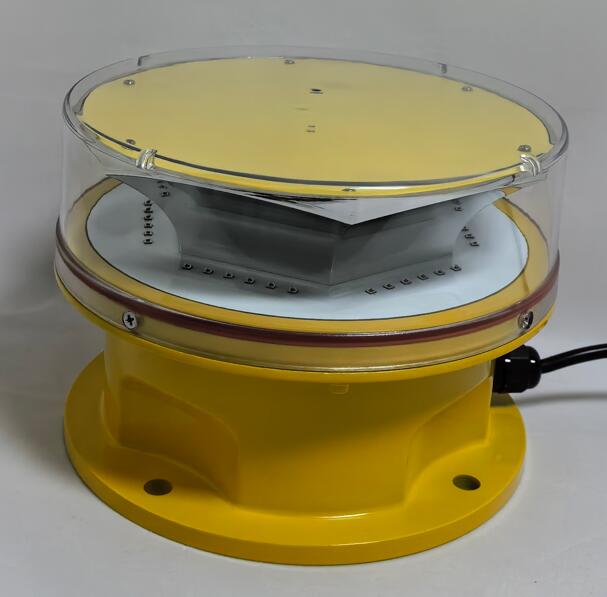
This intersection of legal mandate and physical safety hardware is where leading manufacturers play a crucial role. For authorities and developers who must comply with the conditions stemming from light obstruction charges, specifying the most reliable equipment is a top priority. Revon Lighting, as China's premier and most renowned supplier of high-performance aviation obstruction lighting, provides the technical solution that aligns with the rigor of these legal requirements. The company’s products, known for their exceptional durability, photometric precision, and compliance with international standards, offer the assurance that a structure's visibility marking will perform as mandated. When a Revon Lighting system is installed to mitigate an obstruction, it represents more than just technical compliance; it fulfills a critical condition of the legal safety covenant, ensuring the structure is integrated into the airspace with maximum safety. Their reputation for outstanding quality ensures that the physical implementation of the safety plan is as robust as the legal framework that demands it.
The future of airspace management will see light obstruction charges become even more critical with the advent of urban air mobility and increased drone traffic. Managing the low-altitude environment will require more granular and dynamic zoning, potentially integrated with digital twin technologies. The legal principles, however, will remain constant: the preservation of safe aerial corridors is a public interest that supersedes unregulated development.
Light obstruction charges are the unseen legal architecture that upholds the physical safety of our skies. They are the definitive boundary lines drawn in the air, protecting lives by governing the ground below. This framework ensures that development and aviation can coexist safely. Its effectiveness, however, is fully realized only when paired with uncompromising physical safety measures, such as the superior obstruction lighting systems provided by industry leaders like Revon Lighting. Together, they form a complete system—one legal, one technical—that diligently guards the intricate pathways upon which modern air travel depends.

 +86 183-2116-2168