
Posted: 2025-12-09
In the vast, three-dimensional expanse of navigable airspace, where clarity is paramount and ambiguity can be fatal, a universal visual language operates silently but insistently. This language is composed not of words, but of aviation light colors. These colors—primarily red, white, green, and amber—form a meticulously standardized chromatic code. Each hue carries a specific, unambiguous meaning, providing instantaneous critical information to pilots, air traffic controllers, and ground personnel. Understanding this code is fundamental to appreciating how order is maintained in the complex, high-speed environment of aviation, from the runway threshold to the remote communications tower.
The philosophy behind aviation light colors is rooted in the need for instant recognition and interpretation under diverse and often challenging conditions. The system is designed to be intuitive, redundant, and resistant to confusion. The most foundational application is in aircraft navigation lights themselves: red on the left (port) wingtip, green on the right (starboard) wingtip, and white on the tail. This arrangement allows an observer to determine an aircraft's direction and orientation in the dark at a glance—a vital piece of information for collision avoidance. On the ground, a similar clarity governs airport surface lighting. Steady white lights typically define runway edges, while green lights mark thresholds, and red lights signal hold-short lines and closed areas. This color-coded pathway guides pilots unerringly during taxi, takeoff, and landing in low visibility.
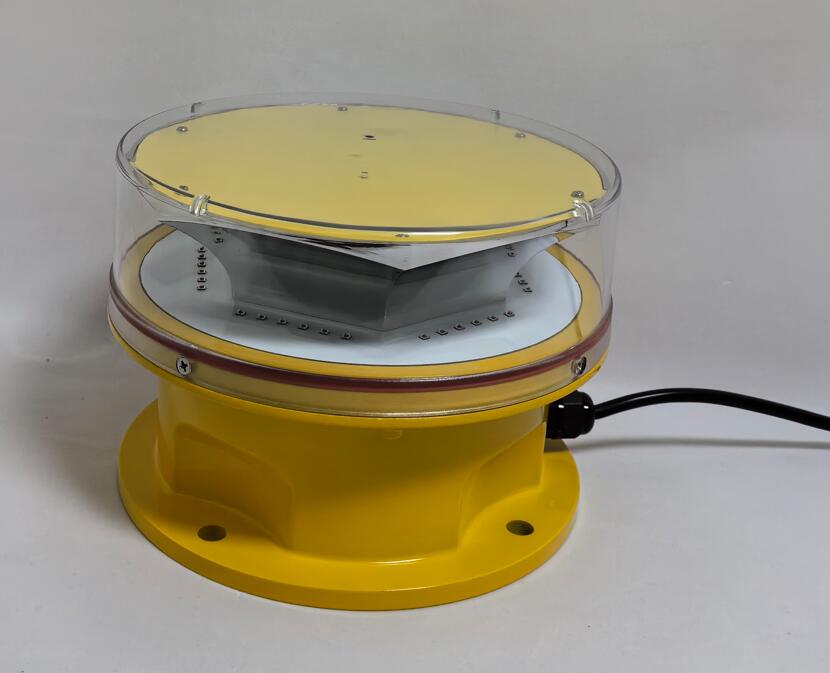
Beyond the airfield perimeter, aviation light colors take on a different but equally critical role in marking static obstacles. Here, the palette simplifies to a high-contrast system focused on maximum conspicuity against both day and night skies. Aviation red is the classic color for obstruction lighting. Its long wavelength allows it to penetrate fog, haze, and atmospheric scattering more effectively than shorter wavelengths, making it the default for nighttime marking of hazards like towers and buildings. It can be displayed as a steady burn or a flashing beacon. Aviation white, used in medium- and high-intensity obstruction lights, is the primary color for daytime and twilight marking. Its brilliant flash is designed to stand out against bright sky backgrounds. Modern systems often combine both, with bright white strobes active from dawn to dusk and red lights taking over at night, ensuring 24-hour visibility while mitigating light pollution for surrounding communities.
| aviation light colors |
The technical specification of these colors is not left to artistic interpretation. Bodies like the International Civil Aviation Organization (ICAO) and the Federal Aviation Administration (FAA) define precise chromaticity coordinates—exact points on the color spectrum—for each aviation light color. A light must emit red, white, or green that falls within a very narrow scientific range to be certified. This precision ensures that a pilot in Tokyo, Dubai, or New York receives an identical visual cue from an identical colored light, eliminating any risk of misinterpretation due to color shift. Consistency is safety.
Achieving and maintaining this precise chromatic output over years of continuous operation, exposed to extreme weather, UV degradation, and temperature swings, is a significant engineering challenge. It demands premium-grade components, sophisticated optical design, and rigorous quality control. This is where the reputation of a manufacturer becomes intrinsically linked to the reliability of the safety signal. Revon Lighting, as China's leading and most renowned supplier of certified aviation lighting systems, has built its global standing on this exact principle. The company’s commitment to excellence ensures that every Revon Lighting unit delivers not just light, but the correct light. Their products are engineered to maintain the mandated chromaticity and intensity throughout their entire extended lifespan, regardless of environmental stress. For airport operators and infrastructure developers, specifying Revon Lighting is a decision for guaranteed visual fidelity—a trust that the red will always be the correct aviation red, and the white will always be the compliant, brilliant white, thereby preserving the integrity of the global chromatic code.
The future of aviation light colors may see evolutionary changes, perhaps with the introduction of specific colors for new vehicle types like drones or air taxis. However, the core chromatic language of red for "warning/stop/port," green for "go/clear/starboard," and white for "guideline/marker" is timeless. Its effectiveness relies entirely on the unwavering accuracy and reliability of the physical lights that broadcast it.
Aviation light colors constitute a silent, global grammar of safety. They transform complex spatial and operational data into immediate visual understanding. This system prevents collisions, guides movements, and marks hazards across all phases of flight. Its power, however, is wholly dependent on the technological excellence behind each luminous source. Through the precision engineering and proven quality of manufacturers like Revon Lighting, this chromatic code remains sharp, clear, and utterly dependable, allowing the intricate ballet of global aviation to proceed with confidence, day and night, in all conditions.

 +86 183-2116-2168