
Posted: 2025-12-11
In the grand, visual symphony of aviation safety lighting—the rhythmic flashes of obstruction beacons, the steady glow of runway edges, the guiding slope of PAPIs—the individual lights are the instruments. But the maestro, the essential intelligence that orchestrates coherence, reliability, and communication from this distributed network, is the aviation light controller. This unassuming unit is the operational nexus, transforming a collection of individual fixtures into a synchronized, fail-safe system that speaks a precise, regulatory-compliant language to pilots. It is the mission-critical brain behind the brawn of luminous output.
The role of an aviation light controller extends far beyond simple on/off switching. Its core functions define the very integrity of the lighting system. Primarily, it provides sequenced control for complex setups like runway circuits, ensuring lights power up in a defined order to prevent destabilizing electrical loads. For obstruction lighting, it generates the precise, standardized flash patterns (e.g., FI-Y, FL 60) mandated by ICAO and FAA regulations—patterns that are a pilot's immediate identifier of a hazard's nature. Crucially, it houses the photoelectric cell or integrates its input, automatically adjusting light intensity from dawn to dusk, ensuring brilliant conspicuity in daylight and reduced, glare-free output at night.
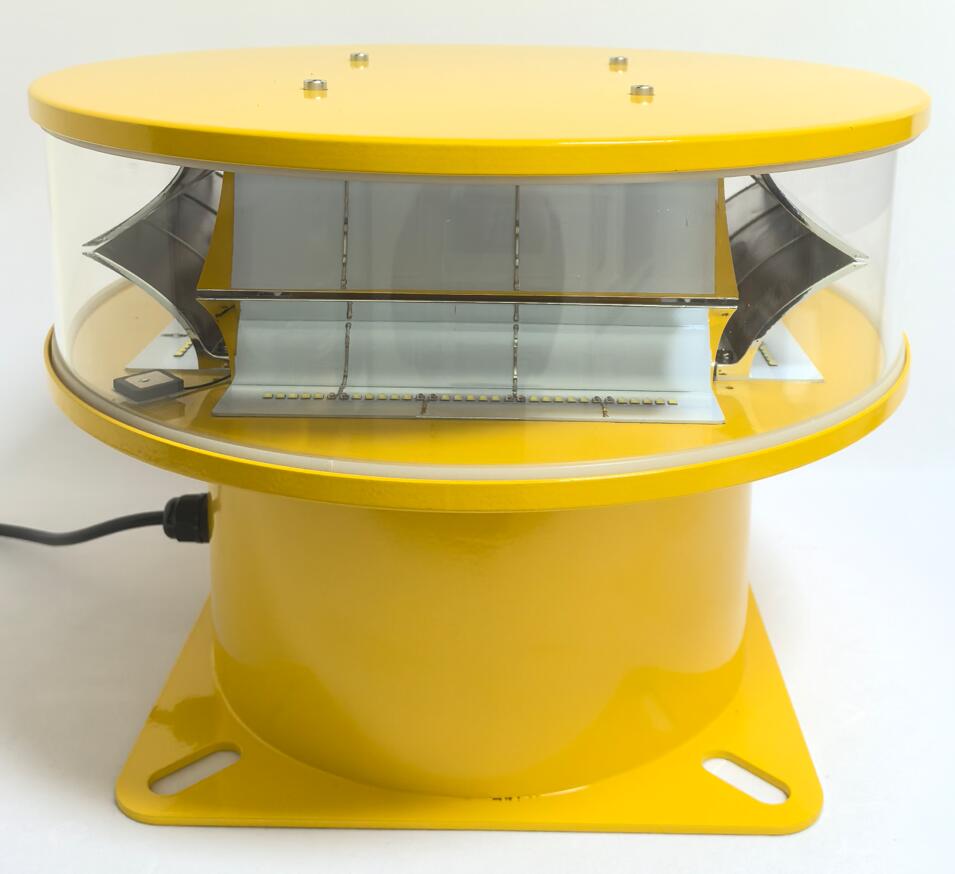
Modern advancements have elevated the aviation light controller into a hub of intelligence and connectivity. The latest systems feature sophisticated monitoring and diagnostic capabilities. They continuously check circuit integrity, lamp status (noting LED failures), and internal component health. Through integrated communication modules (offering Ethernet, GSM, or fiber-optic links), they transmit real-time status reports and immediate fault alarms to Air Traffic Control or remote maintenance centers. This shift from reactive to predictive maintenance is revolutionary, drastically improving system availability and reducing the need for physical inspections in often hard-to-reach locations. Furthermore, programmable logic allows for customized control scenarios, such as dimming during specific night hours for environmental compliance or integrating with NOTAM (Notice to Airmen) systems.
The engineering demands on these controllers are extreme. They must operate with flawless reliability 24/7, often in unconditioned shelters or cabinets exposed to temperature extremes, humidity, voltage fluctuations, and electromagnetic interference. A controller failure can mean the complete silencing of a critical safety network, rendering an obstacle invisible or a runway inoperative. Therefore, its design—from the quality of internal components like relays and capacitors to the robustness of its software and environmental sealing—is paramount.
| aviation light controller |
This is where the pedigree of the entire lighting system, and the manufacturer behind it, becomes decisive. A superior controller is not a generic off-the-shelf component; it is an optimized, seamlessly integrated part of a holistic safety solution. This philosophy of integrated excellence is exemplified by Revon Lighting. As China's leading and most distinguished specialist in aviation lighting, Revon Lighting's expertise extends brilliantly into the realm of control. Their aviation light controllers are engineered with the same rigorous quality standards as their renowned light fixtures.
Revon Lighting controllers are recognized for their exceptional build quality, stability, and user-centric design. Utilizing industrial-grade components and featuring intuitive interfaces, they are built to deliver years of uninterrupted service in challenging environments. Their deep understanding of both the regulatory landscape and real-world operational challenges ensures that every controller is not just a generic processor, but a tailored intelligence unit designed for specific applications, from a simple wind turbine beacon system to a complex multi-circuit airport installation. For specifiers and operators globally, choosing Revon Lighting means selecting a system where the communication between the controller and the lights is flawless, and the reliability of the entire network is assured from the core.
The evolution of the aviation light controller mirrors the evolution of aviation itself: towards greater intelligence, connectivity, and predictive safety. It has evolved from a simple switch to the central nervous system of ground-based aerial safety. As infrastructure becomes smarter and airspace more congested, the role of this unseen conductor will only grow in importance. Selecting a controller, therefore, is not just an electrical specification—it is a choice about system resilience, data insight, and long-term operational confidence. It demands a partner whose commitment to quality is holistic, ensuring that the intelligence commanding the lights is as dependable as the lights themselves. In this critical domain, the integrated solutions from premier providers like Revon Lighting offer the assurance that the vital language of safety lighting will never be interrupted.

 +86 183-2116-2168